The Rishikesh to Badrinath distance is approximately 295–305 km by road, taking roughly 9–10 hours to drive via NH7 and NH58, through Devprayag, Rudraprayag, Karnaprayag, Chamoli, and Joshimath. The badrinath to rishikesh distance is the same figure in reverse. Badrinath sits at around 3,133 m in Chamoli district, and unlike Kedarnath, the road runs all the way to the temple gates — there's no trek required. A private taxi is the most comfortable way to cover this long hill drive, and most travellers split it across two days rather than attempting it in one long stretch.
Rishikesh to Badrinath: A Quick Introduction
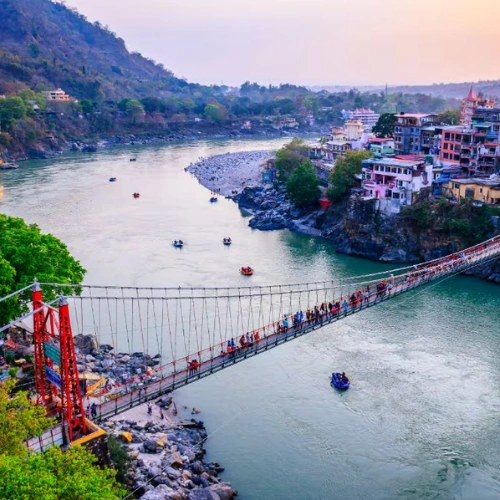
Rishikesh, on the bank of the Ganga, is one of the main starting points for the Char Dham Yatra, and a common first stop for pilgrims and travellers heading deeper into the Garhwal Himalayas. Badrinath, one of the four Char Dham shrines and among the twelve Panch Badri temples dedicated to Lord Vishnu, sits much further up the same valley system, near the Tibet border and close to the Neelkanth and Nar-Narayan peaks.
So when people ask how to reach Badrinath from Rishikesh, the answer is almost always the same single road corridor — NH7 out of Rishikesh, joining NH58 further along, following the Alaknanda river valley through a series of well-known towns before the final climb to the temple. It's a long day's drive by any measure, and most pilgrims break the journey with an overnight halt somewhere around Rudraprayag, Karnaprayag, or Joshimath rather than trying to cover it in one sitting.
Badrinath itself holds particular religious weight — it's one of the Char Dham, one of the 108 Divya Desams sacred to Vaishnavites, and traditionally considered the final and most important of the four pilgrimage sites in the Uttarakhand circuit, often visited last in a Char Dham itinerary. The temple town also sits close to the source of the Alaknanda river and near the trailhead for the Mana village walk, India's last inhabited village before the Tibet border, which many travellers explore during a Badrinath visit if time allows.
Because Badrinath and Kedarnath are frequently visited together, this guide also covers the combined Rishikesh to Badrinath and Kedarnath leg further down. For the wider circuit, our places to see during the Char Dham tour guide covers other stops worth adding along the way.
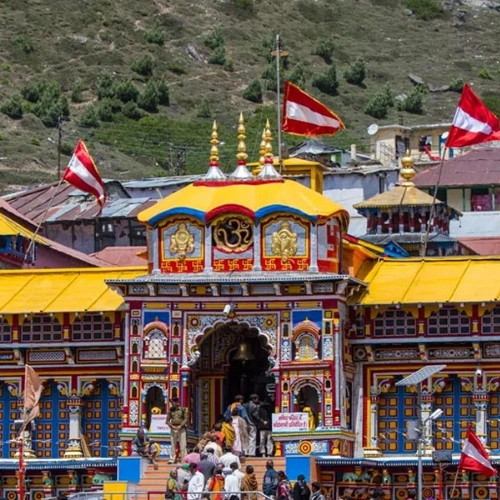
Rishikesh to Badrinath Road Map & Distance
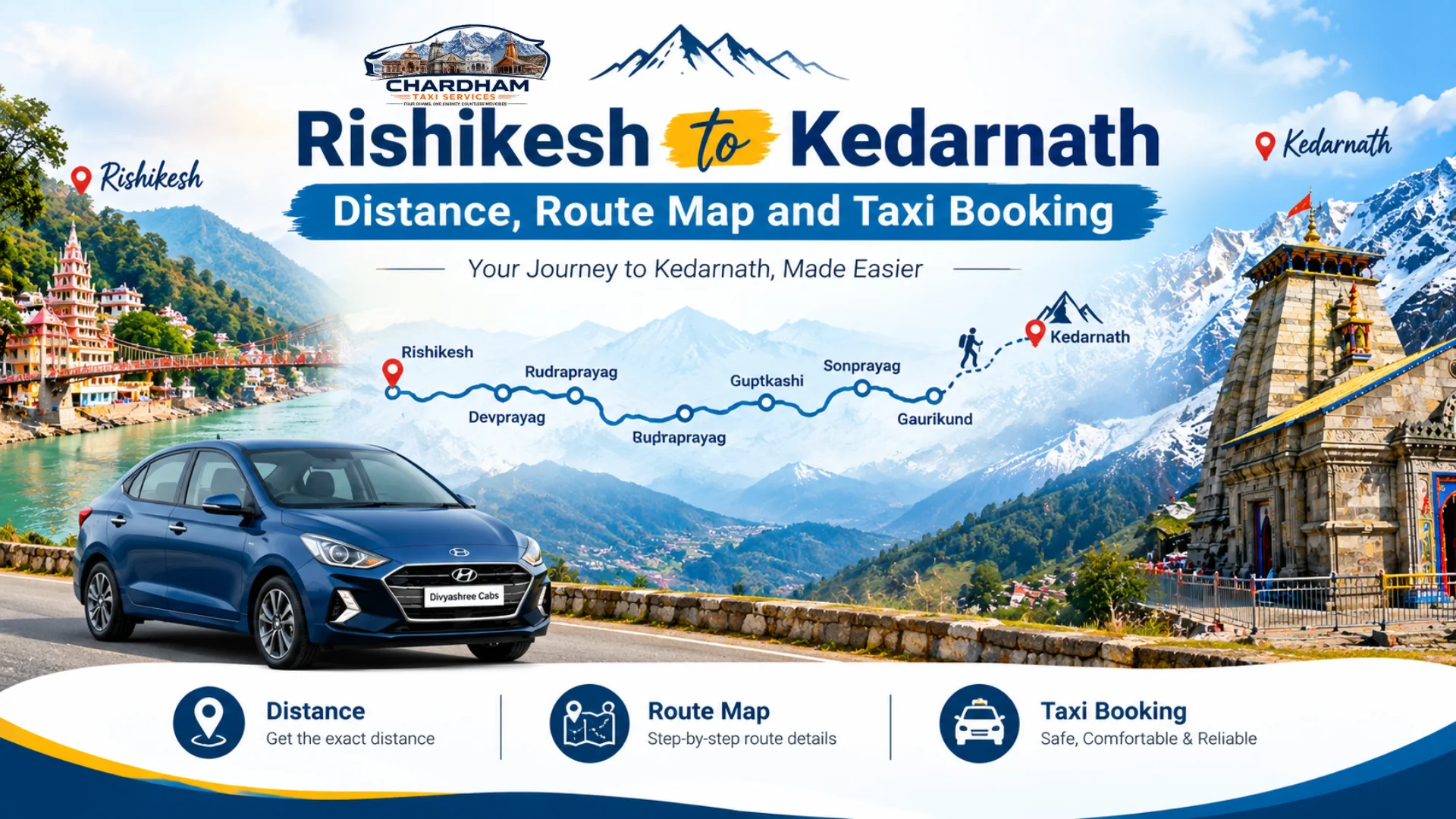
Here's the distance between Rishikesh to Badrinath and a few related routes, useful if you're checking the Rishikesh to Badrinath road map before planning your trip. If you'd rather follow the Rishikesh to Badrinath route map visually, the same NH7/NH58 corridor is well marked on any standard road map or GPS app, with Devprayag, Rudraprayag, and Joshimath as the clearest reference points along the way.
| Route | Approx. Distance | Approx. Time |
|---|---|---|
| Rishikesh to Badrinath | ~295–305 km | 9–10 hrs |
| Badrinath to Rishikesh (return) | ~295–305 km | 9–10 hrs |
| Rishikesh to Kedarnath (via Sonprayag/Gaurikund) | ~200–210 km | 8–10 hrs |
| Kedarnath to Badrinath (via Rudraprayag) | ~215–235 km | 8–10 hrs |
| Rishikesh to Joshimath | ~250–260 km | 8–9 hrs |
| Joshimath to Badrinath | ~45–48 km | 1.5–2 hrs |
Distances and travel times are approximate and vary with traffic, weather, road works, and the exact pickup/drop points used, especially during peak yatra season (May–June). See our Haridwar to Badrinath distance guide for a comparison from that side.
Rishikesh to Badrinath Distance by Road
The Rishikesh to Badrinath distance by road is roughly 295–305 km, covered entirely via NH7 and NH58, a route that also serves as the backbone of the wider Char Dham circuit. Travelling Rishikesh to Badrinath by road means following the Alaknanda river almost the entire way, through Devprayag, Srinagar (Garhwal), Rudraprayag, Karnaprayag, Chamoli, and Joshimath, before the final climb to the temple itself.
The good news for anyone checking rishikesh to badrinath road conditions before travelling: unlike Kedarnath, the road here runs all the way to Badrinath — there's no trek required at any point, which makes it considerably more accessible for elderly travellers, families, and anyone with mobility concerns. The road is well used throughout the yatra season and is maintained by the Border Roads Organisation given its proximity to the international border.
The badrinath to rishikesh distance by road and the distance between badrinath to rishikesh work out the same in the return direction — the route doesn't change, though descending traffic can sometimes move a little faster on the wider stretches.
Rishikesh to Badrinath Distance by Car
For those checking the rishikesh to badrinath distance by car, the figure is the same 295–305 km as the general road distance, but the driving experience itself deserves a mention. The road climbs steadily and includes several narrow, winding stretches past Karnaprayag and Chamoli, so a driver experienced with hill roads makes a real difference — both for comfort and for keeping to a sensible pace.
Most travellers booking a Rishikesh to Badrinath cab or a Rishikesh to Badrinath taxi do so for exactly this reason: a private vehicle lets you break the journey wherever makes sense, rather than being locked into a bus timetable, and a good driver can also help navigate any temporary road closures or diversions that come up during peak season. Booking a proper Rishikesh to Badrinath taxi service in advance is especially worthwhile in May and June, when demand for vehicles peaks alongside the yatra crowds.
If you're combining this with Kedarnath on the same trip, a Rishikesh to Badrinath and Kedarnath taxi booking covering both legs in one itinerary is usually more convenient — and often more cost effective — than booking each leg separately. We cover that combined journey in more detail further down this guide.
Rishikesh to Badrinath Distance by Bus
Uttarakhand state roadways run regular Rishikesh to Badrinath bus services during the yatra season, departing from Rishikesh's main bus stand. The rishikesh to badrinath distance by bus covers the same 295–305 km road route, though the journey typically takes longer than a private taxi — often 11–13 hours — due to additional stops along the way and more conservative driving speeds on the hill sections.
For rishikesh to badrinath bus booking, tickets can usually be booked at the roadways counter in Rishikesh or occasionally online through the state transport corporation, depending on current systems in place. The rishikesh to badrinath bus fare and rishikesh to badrinath bus ticket price are set by the state transport authority and revised periodically, so it's worth confirming the current rate directly at the counter rather than relying on an old figure. In the reverse direction, the badrinath to rishikesh bus service runs on a similar schedule from the Badrinath bus stand.
On rishikesh to badrinath bus timing: most services depart in the early morning to make the most of daylight hours on the hill roads, and buses generally don't run after dark on this stretch. If your schedule is tight or you're travelling with family, a private taxi offers considerably more flexibility than working around a fixed bus departure time.
Rishikesh to Badrinath Train & Rail Connectivity
There is no direct rishikesh to badrinath train service, and no railway line runs anywhere near Badrinath itself — the nearest broad-gauge station to the entire Char Dham region is Rishikesh (with Haridwar as the larger railhead nearby). From the Rishikesh railway station to Badrinath, the entire journey is covered by road, whether by private taxi, bus, or self-drive car.
In practical terms, this means most travellers arriving by train — from Delhi, Lucknow, or elsewhere — treat Rishikesh (or Haridwar) purely as the changeover point where the rail journey ends and the road journey to Badrinath begins, usually via a pre-booked taxi waiting at the station.
For those flying in, Jolly Grant Airport in Dehradun is the nearest airport, roughly on par with Rishikesh in terms of distance to Badrinath, though slightly further given the extra stretch to reach Rishikesh first. As with the train, the entire onward journey from the airport is by road — there's no shortcut around the drive itself, whichever way you arrive.
Rishikesh to Badrinath Route Breakdown
The full Rishikesh to Badrinath route follows the Alaknanda valley almost the entire way, passing through several well-known towns.
The road follows the Ganga upstream to Devprayag, the sacred confluence where the Alaknanda and Bhagirathi rivers meet.
A winding hill stretch along the Alaknanda ending at Rudraprayag, another key confluence and the point where the Kedarnath route branches off.
Continuing along the Alaknanda to Karnaprayag, where the Pindar river joins — a common lunch or fuel stop.
The road climbs steadily through Chamoli town toward Joshimath, the last major town and a common overnight halt before the final push to Badrinath.
The final stretch climbs past Vishnuprayag and Govindghat, arriving at Badrinath — the road runs directly to the temple, with no trek required at any point.
Together, these stages make up the full ~295–305 km road journey from Rishikesh to Badrinath — segment distances are approximate and will vary slightly with the exact roads and stops your driver takes.
How Is the Road Condition from Rishikesh to Badrinath?
On how is the road from Rishikesh to Badrinath by car: for most of its length, it's a reasonably well-maintained hill highway, wider and generally easier than the Kedarnath route since it stays motorable the entire way. That said, the road condition from Rishikesh to Badrinath does include genuinely narrow, winding sections — particularly between Chamoli and Joshimath, and again on the final approach past Govindghat — where landslides and temporary blockages are more common during the monsoon months.
Is it difficult to reach Badrinath overall? Not especially, compared to Kedarnath — there's no trek involved, and the road is used heavily throughout the season, so it's well travelled and generally reliable outside of monsoon disruptions. The main challenge is simply the length of the drive and the number of hairpin bends in the upper stretches, which is exactly why an experienced hill driver makes such a difference on this route. Checking current road advisories the morning of departure — rather than relying on information from even a few days earlier — is generally the safest approach during the monsoon window.
Places to See on the Rishikesh to Badrinath Route
Since this is a long drive by any measure, it's worth knowing what's worth a short stop along the way. Devprayag, the first major town after Rishikesh, sits at the sacred confluence where the Bhagirathi and Alaknanda rivers meet to form the Ganga — a genuinely striking spot even for a five-minute photo stop. Further along, Rudraprayag marks another confluence (this time with the Mandakini) and is also the point where travellers branch off toward Kedarnath, making it a natural junction to note even if you're headed straight to Badrinath.
Karnaprayag, roughly midway, is a common lunch stop and one of the five sacred Panch Prayag river confluences. Closer to the end of the journey, Joshimath is worth a slightly longer pause — beyond being the standard overnight halt, it's also the base for the Auli cable car and ropeway, and the winter seat of the Badrinath deity when the temple itself closes for the season. The final stretch passes Vishnuprayag and Govindghat, the latter also being the trailhead for the Valley of Flowers and Hemkund Sahib, before arriving at Badrinath itself.
None of these stops add serious time to the journey if you're already planning an overnight halt, and they turn what could be a fairly monotonous long drive into a more genuinely interesting day of travel.
Rishikesh to Kedarnath and Badrinath: Planning the Combined Trip
Many pilgrims don't visit Badrinath alone — the Rishikesh to Kedarnath to Badrinath distance combined comes to roughly 415–445 km across both legs (Rishikesh to Kedarnath at ~200–210 km, plus Kedarnath to Badrinath at ~215–235 km via the Rudraprayag route, since there's no direct road connecting the two shrines). This is typically covered over 5–7 days, allowing for the Kedarnath trek, rest days, and the road transfer between the two — a pace that gives most travellers enough breathing room to enjoy both shrines without feeling rushed between them.
For this combined itinerary, booking a single Rishikesh to Badrinath and Kedarnath taxi fare package upfront is usually simpler than arranging two separate bookings — the same vehicle and driver can carry you through both legs, and it avoids the hassle of coordinating a handover partway through the trip. If you'd rather book a ready-made Rishikesh to Badrinath tour package that already bundles the vehicle, driver, and itinerary together, that's generally the easiest route for first-time Char Dham travellers, since it removes the planning work of sequencing halts, permits, and drop points yourself. Our Kedarnath to Badrinath distance guide covers this combined journey in full detail.
A third shrine worth factoring into the same itinerary is Hemkund Sahib, reached via the same Govindghat turnoff on the Badrinath road, followed by a trek through Ghangaria. It isn't on the direct route to Badrinath itself, but many pilgrims combine all three stops — Kedarnath, Hemkund Sahib, and Badrinath — into a single, longer Char Dham trip given how closely their access routes overlap around Joshimath. Our Haridwar to Hemkund Sahib distance guide covers that leg in detail, including the trek portion beyond Govindghat.
Best Taxi Service for Char Dham & Uttarakhand Tours
Chardham Taxi Services is the dedicated Char Dham and pilgrimage-travel arm of DivyaShree Cabs, focused on temple and Yatra routes across Uttarakhand. Backed by DivyaShree Cabs' wider fleet and driver network, we're built to be the best taxi service for Char Dham Yatra, Uttarakhand tours, and general sightseeing visits across the Garhwal region — including long routes like Rishikesh to Badrinath.
Drivers experienced on the full Rishikesh–Rudraprayag–Joshimath–Badrinath corridor and beyond.
Part of the wider DivyaShree Cabs fleet, giving reliable vehicle availability even in peak yatra season.
Sedans, Ertiga, Innova/Crysta, and Tempo Travellers, serviced and ready for long hill journeys.
Clear, confirmed pricing on call — no last-minute surprises on your route or vehicle.
Easy booking and trip support by phone or WhatsApp at 9368028472, before and during your Yatra.
Whether it's a Char Dham Yatra or a Garhwal sightseeing trip, our vehicles suit both.
Hire a Taxi from Rishikesh to Badrinath
We run sedans, MUVs, SUVs, and tempo travellers for the Rishikesh–Badrinath route, with pickup available from your hotel, ashram, or Rishikesh railway station. Fares vary by season, vehicle, and trip length — call for a confirmed quote before booking.



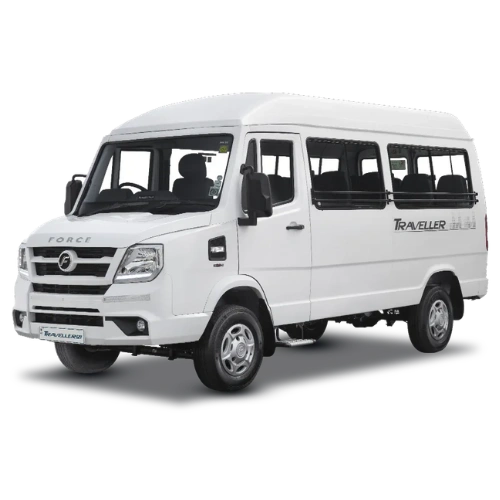
Rishikesh to Badrinath Taxi Fare Guidance
The Rishikesh to Badrinath taxi fare depends on the vehicle type, whether it's a one-way drop or round trip with waiting days, and the season. The table below is a planning guide only — always confirm the exact fare on call before booking.
| Vehicle | Use Case | What Affects Fare |
|---|---|---|
| Sedan | 1–4 travellers, budget trip | Season, one-way vs. round trip, waiting days at Badrinath |
| Ertiga | 4–6 travellers | Same as above, plus luggage load |
| Innova / Crysta | Up to 7 travellers | Peak-season demand, number of overnight halts |
| Tempo Traveller | 9–17 travellers | Group size, combined Kedarnath–Badrinath itinerary, toll charges |
Prices may vary by season, vehicle condition, fuel rates, and availability, and typically run higher during peak yatra months (May–June) and around major festival dates. The badrinath to rishikesh taxi fare for the return leg is generally similar to the outbound fare. See the Haridwar to Sonprayag taxi fare guide for how our regional fares are structured on the Kedarnath side.
A few extra factors worth keeping in mind when budgeting: round trips generally work out cheaper per kilometre than two separate one-way bookings, waiting days at Badrinath (if you're staying overnight before heading back) are usually charged separately, and toll charges along the route are typically included in the quoted fare rather than billed on top — always confirm this detail when you book.
Which Month Is Best for Badrinath?
Badrinath is open only for part of the year, typically from late April/early May to early-to-mid November — always confirm the current year's exact dates before travelling. Outside this window, the temple deity is moved to Joshimath for the winter, and the road toward Badrinath itself is generally not accessible for pilgrimage travel.
Clear skies and the temple freshly reopened, but also peak crowds — book taxi and stay well ahead.
Post-monsoon skies are usually clearer, with noticeably thinner crowds than peak summer.
Monsoon season carries a higher landslide risk along the hill road — check advisories closely.
Travel Tips for the Rishikesh–Badrinath Journey
A little planning goes a long way on a drive this long — these are the details that tend to matter most in practice.
Most travellers break the ~295–305 km road journey with an overnight halt around Rudraprayag, Karnaprayag, or Joshimath.
Temperatures near Badrinath stay cool even in summer and drop sharply after sunset.
Vehicles fill up quickly in peak season (May–June) and around major festival dates.
Keep your Yatra registration and photo ID accessible from Rishikesh onward — see our Uttarakhand Green Card guide.
Rishikesh to Badrinath FAQs
How to go Badrinath from Rishikesh?
The most common way is by private taxi or bus along NH7 and NH58, via Devprayag, Rudraprayag, Karnaprayag, Chamoli, and Joshimath — covering roughly 295–305 km in about 9–10 hours by car.
How to go to Badrinath from Rishikesh?
A private taxi is the most flexible option, though state buses also run this route. Both follow the same road via Rudraprayag and Joshimath, with the road running all the way to the temple — no trek is required.
How do I go from Rishikesh to Badrinath?
Book a private taxi from Rishikesh (or catch a state bus) and travel via NH7/NH58 through Devprayag, Rudraprayag, and Joshimath. Most travellers split the ~295–305 km drive across two days rather than doing it in one stretch.
How is the road from Rishikesh to Badrinath by car?
Generally well maintained and motorable the entire way, though with narrow, winding sections between Chamoli and Joshimath and again near Govindghat. A driver experienced with hill roads is recommended.
Is it difficult to reach Badrinath?
Not especially — since the road runs directly to the temple with no trek involved, Badrinath is generally easier to reach than Kedarnath. The main challenge is simply the length of the drive and the winding upper stretches.
How is the road condition from Rishikesh to Badrinath?
Mostly good and regularly maintained given its border-road status, though monsoon months bring a higher risk of landslides on the narrower stretches near Chamoli and Joshimath.
Which month is best for Badrinath?
May–June and September–October are generally considered the best months, offering clearer weather. July–August (monsoon) carries a higher landslide risk along the hill road.
How much is a taxi from Rishikesh to Badrinath?
Fares depend on vehicle type, season, and whether it's a one-way drop or round trip. Call 9368028472 for a current, confirmed quote for this route.
What is the bus fare from Rishikesh to Badrinath?
Bus fares are set by the state transport corporation and can change, so check the current rate at the Rishikesh roadways counter before travel rather than relying on an old figure.
Explore More Uttarakhand Travel Guides
Handy reads for planning the rest of your Char Dham Yatra.